
If you have ever sat in a therapy session or read a mental health article and felt lost in a sea of terms like “thought record,” “catastrophizing” or “ABC model,” you are not alone.
Cognitive Behavioral Therapy has developed its own vocabulary over decades, and that CBT jargon can feel confusing when you are new to it.
This guide explains the most common CBT slang terms and phrases in plain language.
You will learn what CBT stands for, the main cognitive distortions, key CBT techniques and strategies, important acronyms, and how CBT compares with DBT.
By the end, you will be able to follow a therapy conversation with confidence.
👉Read More: Slaying meaning in instagram
What Does CBT Stand For? CBT Meaning in Therapy
CBT stands for Cognitive Behavioral Therapy. It is a widely used, evidence-based psychological treatment that focuses on identifying and changing negative thought patterns and maladaptive behaviors.
The core idea is simple: the way we think about a situation shapes how we feel and what we do. If we change unhelpful thinking, our emotions and actions can improve too.
👉Read More: BW Meaning Text
CBT is typically structured, goal-oriented and practical. Instead of only exploring the past, a therapist and client work together on current problems, using specific tools and homework between sessions.
Because it is so structured, CBT has developed a lot of specialized terminology, which is why a CBT glossary is so useful for beginners.
Why Does CBT Have So Much Jargon?
Every professional field builds shortcuts for ideas that come up again and again.
In CBT, terms like “cognitive distortion” or “behavioral activation” save time because they name a pattern or technique in just a few words.
👉Read More: RLS Meaning in Text
The downside is that clients can feel left out when therapists use therapy jargon without explaining it. Learning mental health terminology helps you:
- Understand what your therapist is asking you to do
- Complete CBT worksheets and homework with more confidence
- Spot your own negative thinking patterns
- Support a friend or family member who is in treatment
Cognitive Distortions and Thinking Errors
A cognitive distortion is a biased or inaccurate way of thinking that feels true but does not match reality.
👉Read More: What Does BBN Mean
Therapists also call these thinking errors. They are a central idea in CBT because they feed anxiety, stress and low mood. Here are the most common types of cognitive distortions.
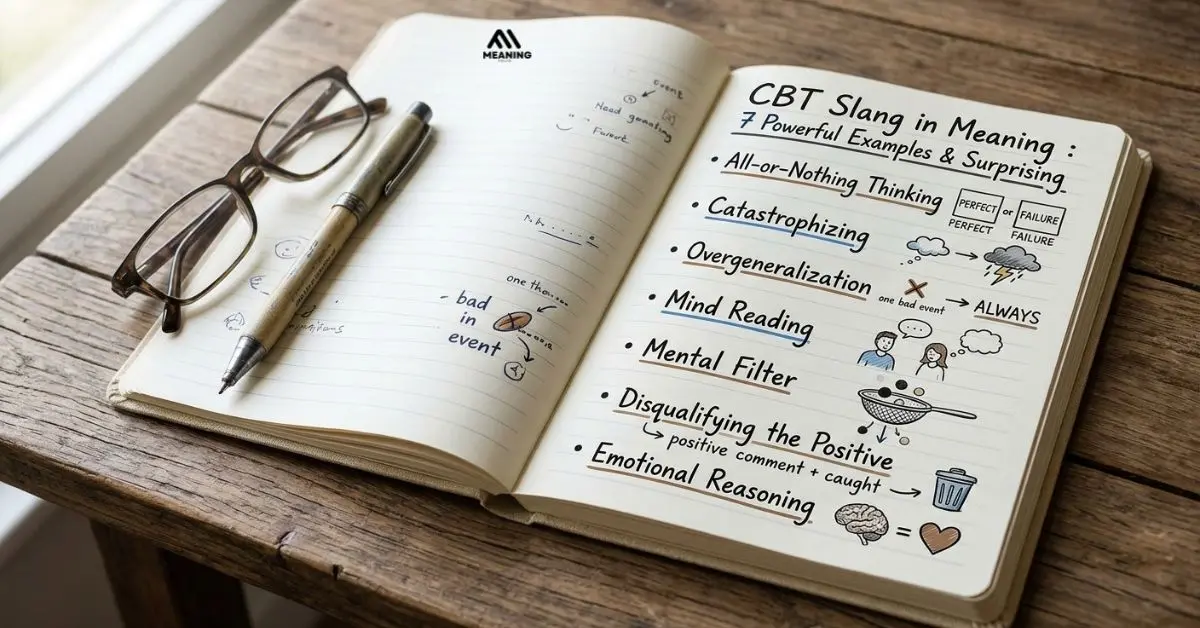
All-or-Nothing Thinking
All-or-nothing thinking, also called black-and-white thinking, means seeing situations in extremes.
Something is either perfect or a complete failure, with nothing in between. For example, “I made one mistake in my presentation, so the whole thing was a disaster.
This rigid style leaves no room for nuance and often leads to harsh self-criticism.
Catastrophizing
Catastrophizing is when a person exaggerates the possible negative outcome of a situation or assumes the worst-case scenario will happen.
👉Read More: P Meaning in Text
A mild headache becomes “something is seriously wrong with me.” This thinking amplifies the perceived threat and can significantly increase anxiety and stress.
Mind Reading
Mind reading is the belief that you know what other people are thinking, usually assuming they are judging you, without any real evidence.
For example, “She did not smile at me, so she must be annoyed.” Mind reading is closely linked to social anxiety and can cause misunderstandings in relationships.
Other Common Thinking Errors
- Overgeneralization: Treating one event as a never-ending pattern (“I always fail”).
- Emotional reasoning: Assuming something is true because it feels true (“I feel guilty, so I must have done something wrong”).
- “Should” statements: Holding rigid rules about how you or others must behave.
- Personalization: Blaming yourself for events outside your control.
- Filtering: Focusing only on negatives while ignoring positives.
👉Read More: What Do FW Mean in Text
Learning to name these patterns is the first step in thought challenging, which means questioning negative thoughts instead of accepting them automatically.
CBT Techniques and Strategies
Beyond vocabulary, CBT is known for its practical toolkit. Here are the techniques you will hear about most often.
Thought Record (Thought Diary)
A thought record, sometimes called a thought diary, is one of the most popular CBT worksheets. It helps you identify, examine and challenge negative thoughts. A typical thought record includes:
- The situation that triggered the feeling
- Your automatic thought
- The emotion and how strong it was
- Evidence for and against the thought
- A more balanced alternative thought
👉Read More: What Does UT Mean in Text
By writing things down, you can see your thinking patterns clearly and slowly change them.
Socratic Questioning
Socratic questioning is a technique in which the therapist asks open-ended questions to help you examine your beliefs.
Examples include “What evidence supports this thought?” or “What would you tell a friend in the same situation?” The goal is not to tell you what to think but to help you develop a more balanced and realistic perspective.
👉Read More: What Does SML Mean
Exposure Therapy
Exposure therapy is a CBT technique used mainly for anxiety disorders, phobias and obsessive-compulsive disorder.
It involves gradually and systematically facing a feared object or situation, in a safe and planned way.
Over time, the fear response weakens. Exposure usually follows a “fear ladder,” moving from less scary to more challenging steps.
Behavioral Activation
Behavioral activation is a strategy for depression. When people feel low, they often withdraw and stop doing things they enjoy, which deepens the low mood.
Behavioral activation encourages scheduling pleasurable or meaningful activities, even small ones. Increased activity can improve mood, boost motivation and counter the negative thought patterns linked to depression.
The ABC Model in CBT
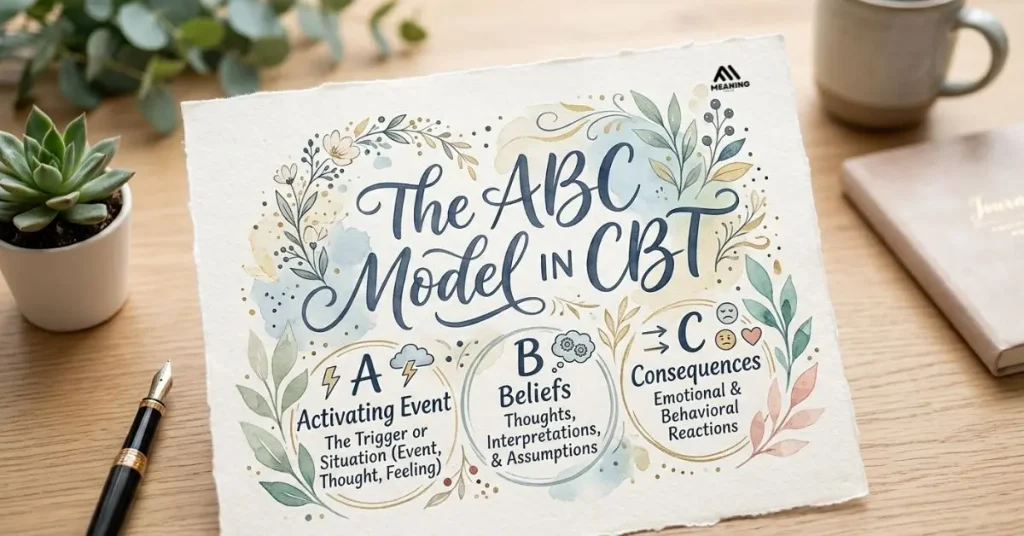
The ABC model is a simple framework that shows how thoughts connect to feelings and actions.
👉Read More: lrc meaning
It is often used to help clients understand why the same event can cause very different reactions in different people.
- A = Activating event: The situation or trigger (for example, a friend does not reply to your message).
- B = Beliefs: Your thoughts and interpretations about the event (“They are ignoring me”).
- C = Consequences: Your emotional and behavioral response (feeling hurt, withdrawing from the friendship).
The key insight is that the event (A) does not directly cause the consequence (C). Your beliefs (B) sit in between.
When you challenge unhelpful beliefs, the consequences can change. Some versions of the model extend it to ABCDE, adding Disputing and Effective new beliefs.
CBT for Anxiety, Depression and Trauma
CBT is one of the most researched forms of psychotherapy. It is commonly used for:
- Anxiety and social anxiety: Challenging catastrophizing and mind reading, and using gradual exposure.
- Depression: Using behavioral activation and thought records to shift negative thinking.
- Phobias and OCD: Using exposure-based methods.
- PTSD and trauma: Using trauma-focused CBT approaches to process difficult memories and reduce symptoms.
- Stress management: Building coping skills and identifying triggers.
CBT does not work the same way for everyone, and results depend on the person, the condition and the quality of the therapeutic relationship.
A licensed therapist can recommend the right approach for your situation.
👉Read More: What Does HMY Mean
CBT Jargon and Acronyms: Quick Glossary
| Term | Meaning |
|---|---|
| CBT | Cognitive Behavioral Therapy |
| DBT | Dialectical Behavior Therapy |
| ABC model | Activating event, Beliefs, Consequences |
| Thought record | Worksheet for challenging negative thoughts |
| Cognitive distortion | Biased or inaccurate thinking pattern |
| Behavioral activation | Scheduling meaningful activities to improve mood |
| Exposure therapy | Gradual, planned facing of fears |
| Socratic questioning | Guided questions that test beliefs |
| Automatic thoughts | Quick, often unnoticed thoughts that arise in situations |
| Homework | Between-session practice tasks |
ABCT Lingo: Organization Terms You May See
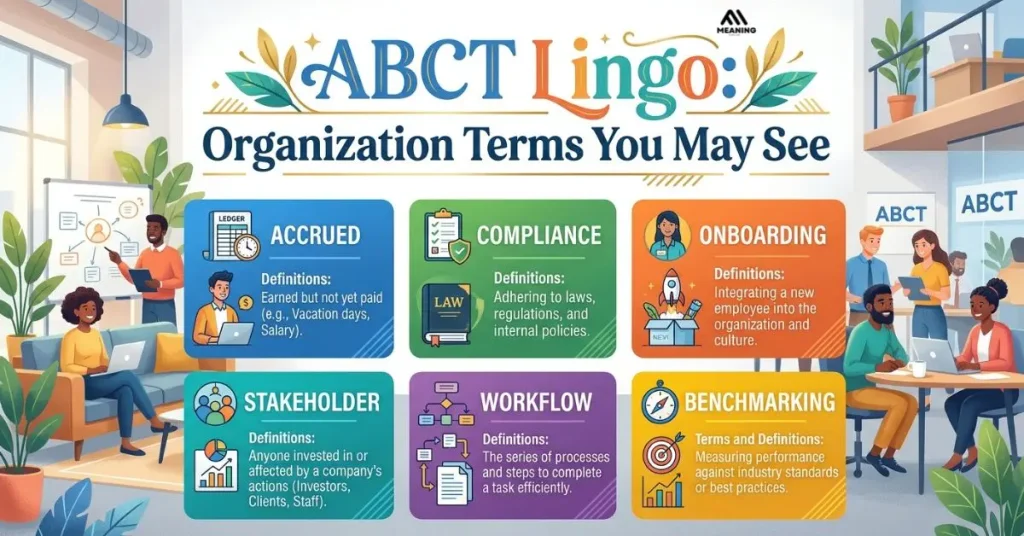
If you read research or professional resources, you will see abbreviations related to the main professional organization in this field:
- AABT: The Association for the Advancement of Behavior Therapy, the earlier name of the organization (1966 to 2005).
- ABCT: The Association for Behavioral and Cognitive Therapies, the current name (2005 to present).
- SIG: Special Interest Group, a community within the organization focused on a specific topic.
- BT: Behavior Therapy, an empirical journal.
- C&BP: Cognitive and Behavioral Practice, a clinically oriented journal.
- tBT: The Behavior Therapist, the organization’s newsletter.
- Webinar: A web-based seminar you can register for and watch online.
So if you are wondering about the difference between AABT and ABCT, the answer is simple: it is the same organization under two names, reflecting its shift from behavior therapy alone to a broader behavioral and cognitive focus.
DBT vs CBT: What Is the Difference?
DBT stands for Dialectical Behavior Therapy. It grew out of CBT and adds a stronger focus on emotion regulation, distress tolerance, mindfulness and interpersonal effectiveness. In short:
- CBT focuses mainly on changing unhelpful thoughts and behaviors.
- DBT combines change strategies with acceptance and mindfulness, and is often used for intense emotions.
Many therapy programs offer DBT skills groups alongside CBT, and the two approaches often complement each other.
Online CBT Therapy and Group Options
Today, you do not need to visit an office to receive CBT. Telehealth and teletherapy have made it easier to meet with a licensed therapist from home. Common formats include:
- Individual sessions: One-on-one work with a therapist.
- Online CBT groups: Small groups where members learn skills together, share experiences and practice techniques such as challenging negative thoughts.
- Self-guided programs: Courses and worksheets you complete at your own pace.
- Family, couples or teen therapy: Formats adapted to different needs.
Group therapy can be especially helpful because you realize others share similar struggles.
When choosing a provider, check the therapist’s license, ask about their experience with your concern, and review costs and session structure before you commit.
CBT Meaning in BDSM: A Different Use of the Same Letters
Because the acronym is shared, some people searching “what does CBT mean” land on a completely unrelated topic.
In kink and BDSM communities, CBT is also used as an abbreviation for a form of adult consensual play.
It has no connection to Cognitive Behavioral Therapy. Context makes the meaning clear: in a mental health, counselling or clinical setting, CBT always means Cognitive Behavioral Therapy.
Within kink-affirming and sex-positive counselling practices, therapists may discuss both topics, but they remain separate subjects.
In that community, safe, sane and consensual practice, clear communication, safe words and aftercare are the guiding principles.
Tips for Learning CBT Language Faster
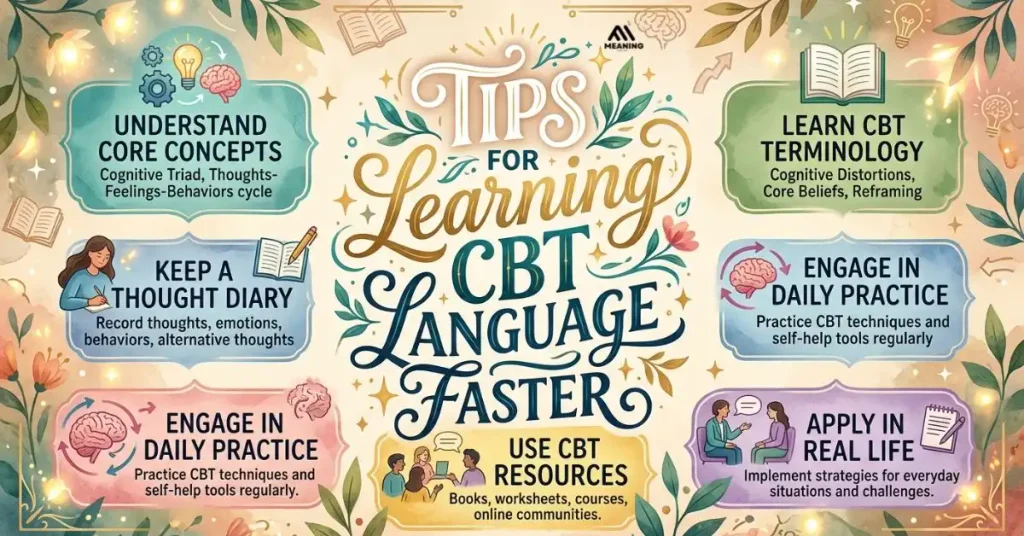
- Keep a glossary. Write down unfamiliar terms from your sessions.
- Ask your therapist to explain. Good therapists welcome questions.
- Practice with a thought record. Using the tools makes the vocabulary stick.
- Notice your own distortions. Try naming one thinking error per day.
- Be patient. CBT works through repeated practice, not instant change.
Final Thoughts
Understanding CBT slang and terminology makes therapy less intimidating and more useful.
When you know what a cognitive distortion is, how a thought record works, and what the ABC model describes, you can take a more active role in your own mental well-being or better support someone you care about.
If you are struggling with anxiety, depression, trauma or constant stress, consider speaking with a licensed therapist.
Whether you choose individual sessions, online CBT group therapy or a DBT skills program, the right support can help you build lasting, practical skills.
FAQs
What does ABCT stand for?
ABCT stands for the Association for Behavioral and Cognitive Therapies, formerly known as AABT.
Does CBT work for anxiety and depression?
CBT is one of the most widely studied treatments for both. Outcomes vary by person, so it is best to discuss options with a licensed professional.
How does a thought record help?
It slows down automatic thinking, lets you weigh evidence and helps you create a more balanced thought.
What is the difference between CBT and DBT?
CBT focuses on changing thoughts and behaviors, while DBT adds acceptance, mindfulness and emotion regulation skills.
What is a cognitive distortion?
A cognitive distortion is a biased way of thinking that does not match reality, such as all-or-nothing thinking, catastrophizing or mind reading.

Hi, I’m M Ahmad Ansari, the founder and content creator at MeaningFolio. With over 3 years of experience in content research and writing, I specialize in explaining word meanings, texting slang, abbreviations, and everyday expressions. My goal is to make language simple and easy to understand by providing clear, helpful, and informative content for every reader.